Estimating Bad Debts Financial Accounting
May 14, 2021 5:58 pm Leave your thoughtsContent
- How to record allowance for doubtful accounts journal entries
- What is an allowance for doubtful accounts (ADA)?
- How Are Aging Schedules Used?
- Allowance for Doubtful Accounts and Bad Debt Expenses
- Formula of ADA by AR aging method
- Learn All About Allowance for Doubtful Accounts (Aka Bad Debt Reserve)
- Why does the percentage of net sales method produce a larger amount for bad debt expense than the aging method?
Management may disclose its method of estimating the allowance for doubtful accounts in its notes to the financial statements. If it does not issue credit sales, requires collateral, or only uses the highest credit customers, the company may not need to estimate uncollectability. Dell’s
bad-debt-expense-to-write-off ratio (see Exhibit
2) for the nine years from 2000 to 2008 is 1.15, which is
reasonably close to the benchmark of 1.0. Although Dell exhibited
two years of possible overestimation in relation to actual
write-offs in 2000 and 2001, the company has more closely matched
bad debt expense with write-offs since 2002. Calculating
estimates of the collectibility of accounts receivable and auditing
those estimates is difficult.
To illustrate, let’s continue to use Billie’s Watercraft Warehouse (BWW) as the example. The direct write-off method delays recognition of bad debt until the specific customer accounts receivable is identified. https://kelleysbookkeeping.com/ Once this account is identified as uncollectible, the company will record a reduction to the customer’s accounts receivable and an increase to bad debt expense for the exact amount uncollectible.
How to record allowance for doubtful accounts journal entries
The companies that qualify for this exemption, however, are typically small and not major participants in the credit market. Thus, virtually all of the remaining bad debt expense material discussed here will be based on an allowance method that uses accrual accounting, the matching principle, and the revenue recognition rules under GAAP. Bad debt expense is an income statement account and carries a debit balance. It indicates how much bad debt the company actually incurred during the current accounting period. Let’s say your business brought in $60,000 worth of sales during the accounting period.
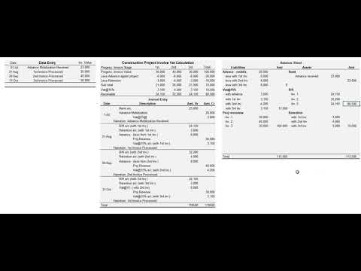
Bad Debt Expense increases (debit) as does Allowance for Doubtful Accounts (credit) for $58,097. Recovering an account may involve working with the debtor directly, working with a collection agency, or pursuing legal action. As much as you would love to collect on every invoice you issue, that doesn’t always happen. Problems such as disputes, miscommunications, and customer insolvency make achieving a 100% collection rate challenging. The Aging-of-Receivables Method helps us calculate the ending balance in the Allowance for Doubtful Accounts. We will have to use our BASE formula or T-account to calculate the Bad Debt Expense.
What is an allowance for doubtful accounts (ADA)?
For example, company XYZ expects 2% of its payment dues between 0-30 days to turn into bad debt. While, the expected bad debt percentage for invoices that are due for days and days is 5% and 10% respectively. Accounts receivable aging is a more precise method to calculate the allowance for doubtful accounts.
- For example, the estimate of uncollectible accounts receivable less
than 30 days old is 0.5% and equals $12,500 (i.e., $2,5000,000 x 0.5%). - This variance in treatment addresses taxpayers’ potential to manipulate when a bad debt is recognized.
- Our automated A/R software makes it easy to track financial metrics and stay on top of every calculation your business needs to be productive.
- The method is tested on the FAR section of the CPA exam, and students in accounting courses are often tested on this concept as well.
- The subsidiary ledger allows the company to access individual account balances so that appropriate action can be taken if specific receivables grow too large or become overdue.
- The AR aging method works best if you have a large customer base that follows multiple credit cycles.
Categories such as current, 31—60 days, 61—90 days, and over 90 days are often used.
How Are Aging Schedules Used?
Other companies use the percentage of receivable method (or a variation known as the aging method). The reported expense is the amount needed to adjust the allowance to this ending total. Both methods provide no more than an approximation of net realizable value based on the validity of the percentages that are applied. The balance sheet aging of receivables method estimates bad debt expenses based on the balance in accounts receivable, but it also considers the uncollectible time period for each account. The longer the time passes with a receivable unpaid, the lower the probability that it will get collected. An account that is 90 days overdue is more likely to be unpaid than an account that is 30 days past due.

One way companies derive an estimate for the value of bad debts under the allowance method is to calculate bad debts as a percentage of the accounts receivable balance. The estimation is typically Estimating Allowance For Doubtful Accounts By Aging Method based on credit sales only, not total sales (which include cash sales). In this example, assume that any credit card sales that are uncollectible are the responsibility of the credit card company.
Categorised in: Bookkeeping
This post was written by chakraa